
Spring Newsletter 🍄
Fungi, artificial intelligence, springtime flowers

Dear friends,
In springtime each year, people flock to the flower markets around Hong Kong, hoping to find that most auspicious of symbols: a closed bud promising to open on the first day of the lunar new year, signaling good fortune for months to come.
This year, unseasonably warm weather in February meant that the majority of flowers bloomed too early, and stalls normally cleared out were left full of stock nobody wanted. The papers reported market sellers’ woes, writing oxymoronic headlines that paired bright, clear skies and springtime flowers with economic downturn and tragedy.
This simple tension reveals an underlying desire to control our own fates. How do we ensure something grows, or doesn’t? What conditions can we control; how can we replicate chance and luck? The journey of these lunar new year flowers begins months before the event, in farms and closed environments where they are grown specifically for the occasion, prepared and frozen, thawed and chemically sprayed, undergoing extreme durational processes just for us to enjoy a moment of blooming on the luckiest day of the year.
At the gallery, installation is well underway for our upcoming solo show for Zheng Mahler, “Mushroom Clouds.” This tension of nature and nurture, growth and decay, is forefront of our minds as we begin building the main work: a large-scale terrarium that will be filled with plants and biological matter to encourage the growth of a variety of mushrooms. Planning what exists naturally in the wild has taken months of logistics and conversation, with the aid of a local mycologist: humidity levels, sufficient light, and systems of output and input must all be considered. Yet we are aware that only so much can be controlled, and that we must relinquish a certain amount of control. There is still so much we do not know about these inhabitants that grow, live, and die alongside us; to imagine how they experience the world is at the root of Zheng Mahler’s ongoing inquiries into consciousness and more-than-human empathy.
“Mushroom Clouds” is a companion exhibition to a new work commissioned by M+ museum, “The Twenty-Three Thousand Sexes of Schizophyllum Commune and Other Stories,” which is now live on their website. A full description of the project can be found below; we hope to see you at the opening on Saturday, March 21, where we will all experience the mushrooms, and the wildness, together. As always, we are open to visits by appointment only; you can contact us here.
Warmly,
Willem and Ysabelle
PREVIEWS
PHD GROUP
ZHENG MAHLER
“MUSHROOM CLOUDS”
PHD Group
Opening March 21, 2026
Gallery hours during Art Week:
Monday to Saturday, 1pm to 10pm
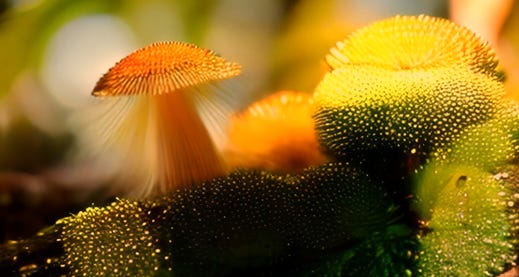
What is it like to live, sense, and feel as a mushroom? Over the past year, Zheng Mahler conducted extensive research on their local home island of Lantau, and encountered thirty-eight distinct species of mushrooms. After photographing and compiling their findings, they produced a unique dataset and fed it into a custom AI model — critiquing and simultaneously expanding AI’s dearth of knowledge around mushrooms in connection with the Western world’s fear of fungi, and to generate new, speculative mushroom species. The project likens the rhizomatic and seemingly infinitely generative nature of mushrooms to emergent AI systems and posits we understand each through the other. At the same time, it invites us to consider our preoccupations with generative qualities of ‘fruiting bodies’ and consider the responsive, cultivating qualities of ‘network’ inputs.
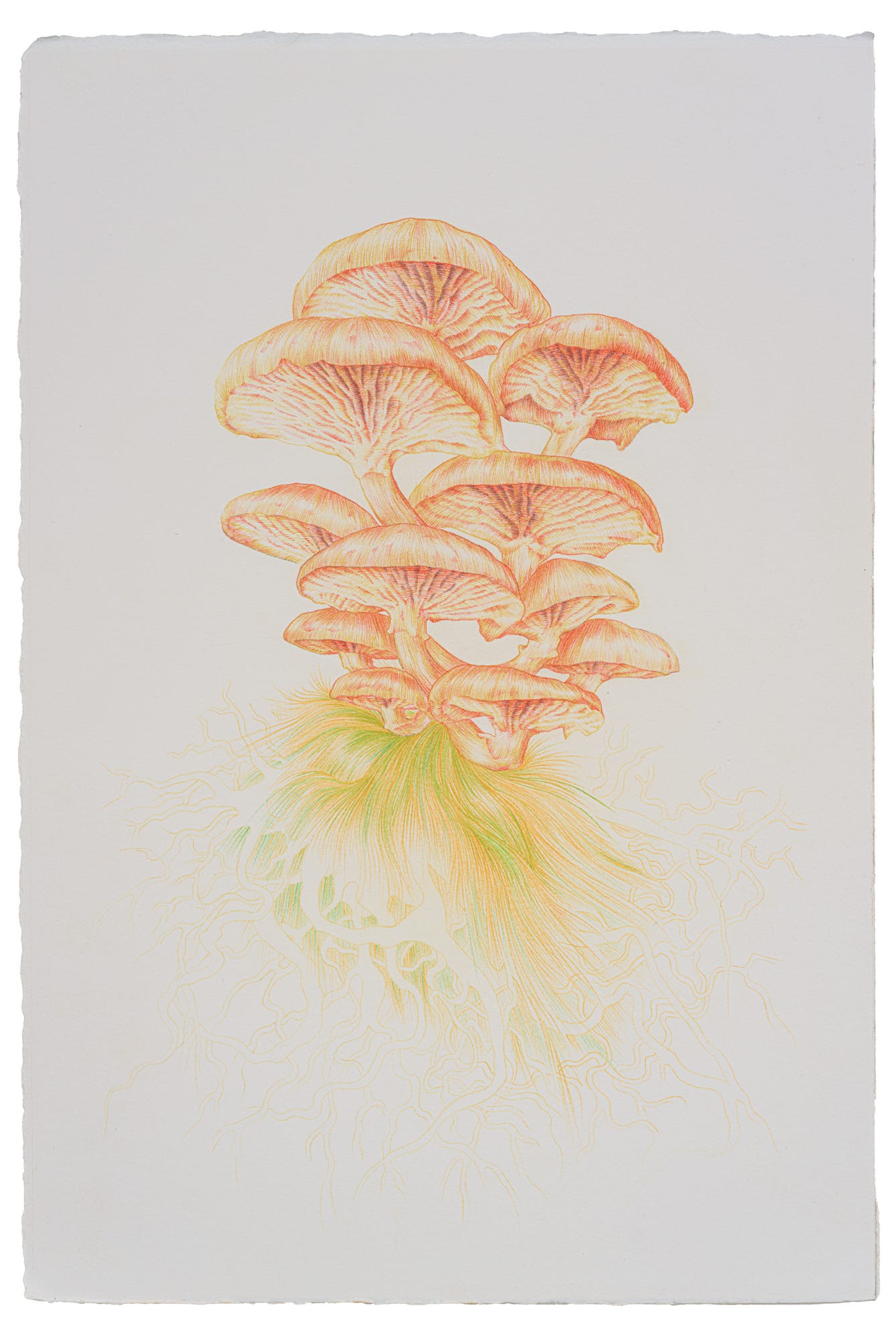
For their solo show at PHD Group, “Mushroom Clouds,” Zheng Mahler will build a large-scale living, breathing, terrarium which simulates the biodiverse ecosystems on Lantau Island, complete with plants and fungi. Within this terrarium, a dense cloud of fog occasionally forms as a reaction to systems of water, heat, and growth, in which projections of AI-hallucinated mushrooms appear, creating a ghostly display of Lantau fungi. A series of drawings of a number of fungi species found on Lantau and used in the AI dataset appears around the gallery space for visitors to similarly encounter and be guided through this immersive, unpredictable and expansive exhibition.
“Mushroom Clouds” is a companion exhibition to a new work commissioned by M+, “The Twenty-Three Thousand Sexes of Schizophyllum Commune and Other Stories,” and completes Zheng Mahler’s Lantau trilogy work, capturing their years-long research into the ontology of their more-than-human neighbours; water buffaloes, bats, and finally, fungi.
ART BASEL HONG KONG
CHAN TING
“ABANDONED ABUNDANCE”
Discoveries 1C34, Art Basel Hong Kong
March 25-29
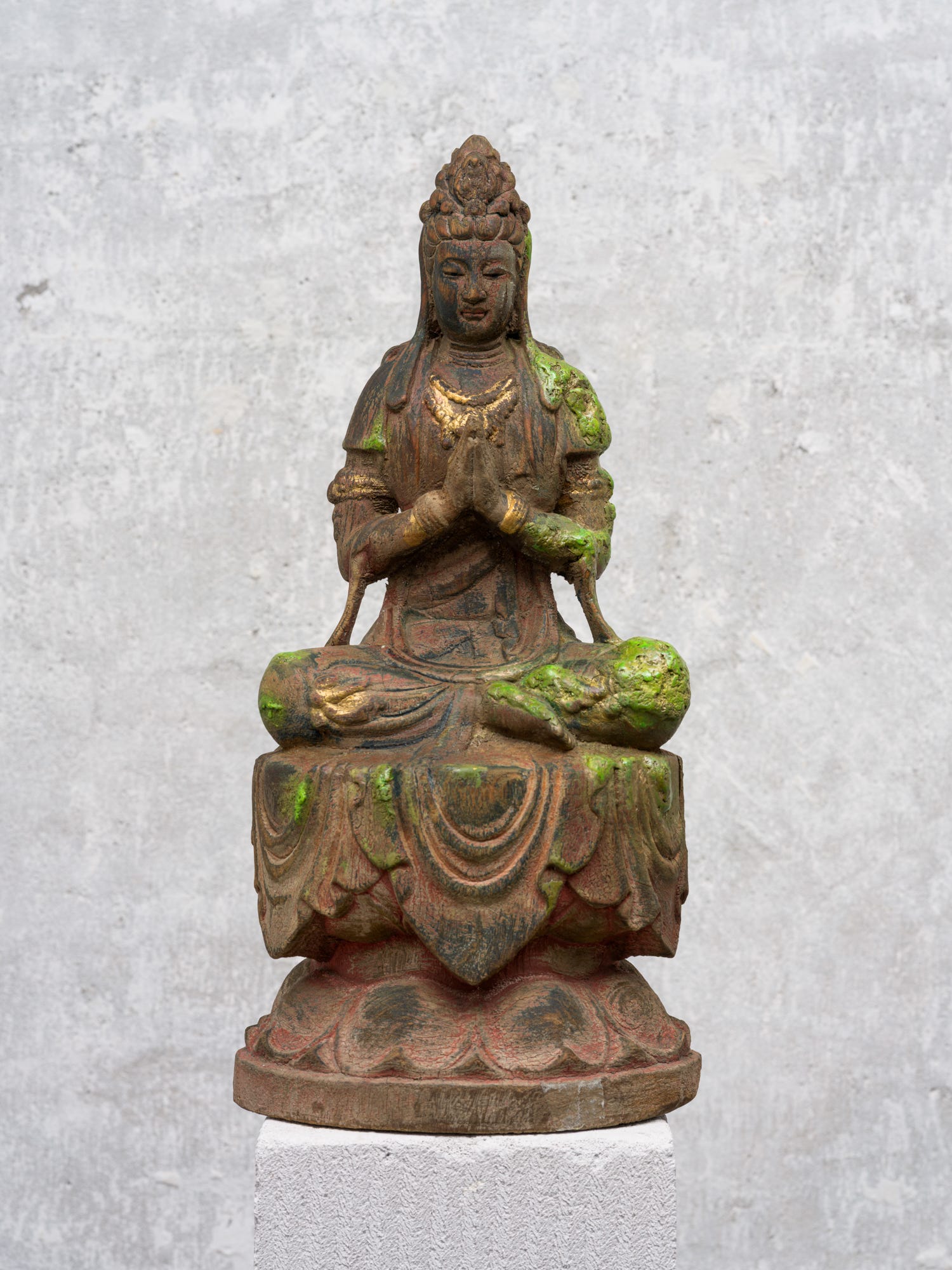
Hong Kong artist Chan Ting (she/they) presents the solo presentation “Abandoned Abundance,” for Art Basel Hong Kong 2026. Drawing on their practice of salvaging and laboriously transforming vintage and secondhand objects—many of them abandoned or left behind—she illuminates the palimpsestic nature of Hong Kong and our interconnected stories, weaving together themes of personal history, migration, queer reinvention, and growth.
For Art Basel Hong Kong 2026, Chan Ting collected vintage objects over the course of 12 months from a variety of backgrounds and time periods, including a statue of the deity Guanyin—known for their representation of gender fluidity—to a military chest from India, a set of doors from Shanghai, and carved wooden flowers from Japan. Utilising typical hardware store materials of plaster, pigment, and industrial paints and varnishes, Chan Ting then carefully transformed these objects, creating a second skin that references moss, an ancient organism that embodies resilience, growth, and queer ways of being.
In totality, the presentation resembles an attic of freestanding or wall-hung totems at the juncture between growth and decay. The title hints at tensions at the crux of Chan Ting’s practice, namely the relationships between an increasingly accumulating world and our throw-away society, and material excess against philosophical emptiness. Inspired by Gaston Bachelard’s The Poetics of Space and the surrealist cinema of Michel Gondry’s The Science of Sleep, Chan Ting’s world plumbs the subconscious and the dreamlike, rooted in earthly forms and objects. Rather than conform to linear and academic narratives of history, Chan instead searches for the stories that make up our memories. “We are never real historians, but always near poets,” Bachelard suggests, “and our emotion is perhaps nothing but an expression of a poetry that was lost.”
PAVILION: KIM SANGDON AND SASAOKA YURIKO
PAVILION Hong Kong, H Queen’s
March 23-28
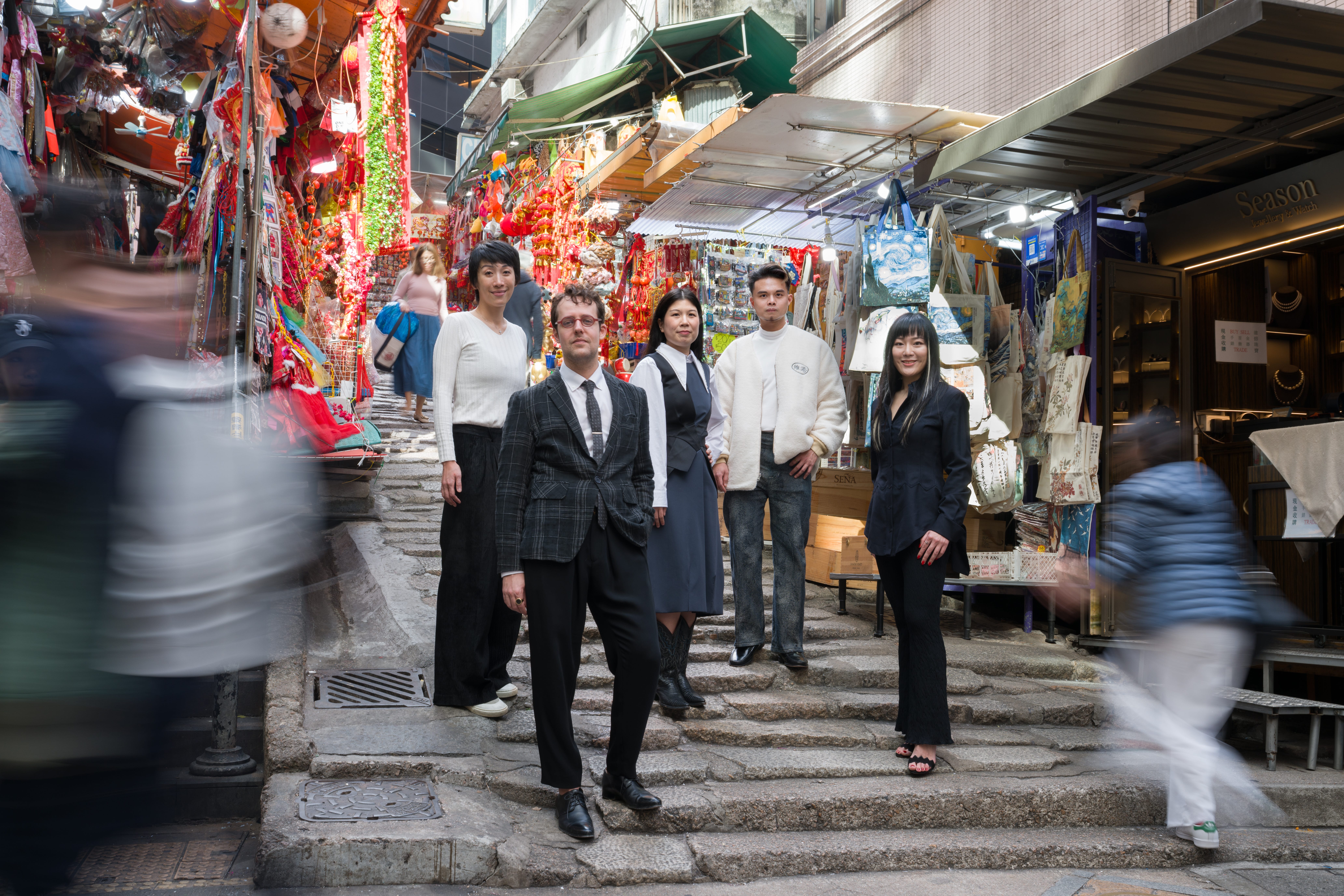
PAVILION is a new alternative art fair that aims to deconstruct the viewing and collecting experience, encouraging slow growth and earnest connections between gallerists and patrons. As expressed in its name, PAVILION is a meeting point, providing metaphorical shade and rest from the intensity of the art market’s hyper-accelerated pace.
Founded by Hong Kong gallerists Willem Molesworth and Ysabelle Cheung of PHD Group, PAVILION is inspired by similar alternative models such as Basel Social Club, Onsen Confidential, and Supper Club, and takes place from March 23-28 across the 11/F and 12/F at Venue Partner H Queen’s.
PHD Group will present works by Sasaoka Yuriko and Kim Sangdon for the 2026 Hong Kong edition of PAVILION.
NEWS
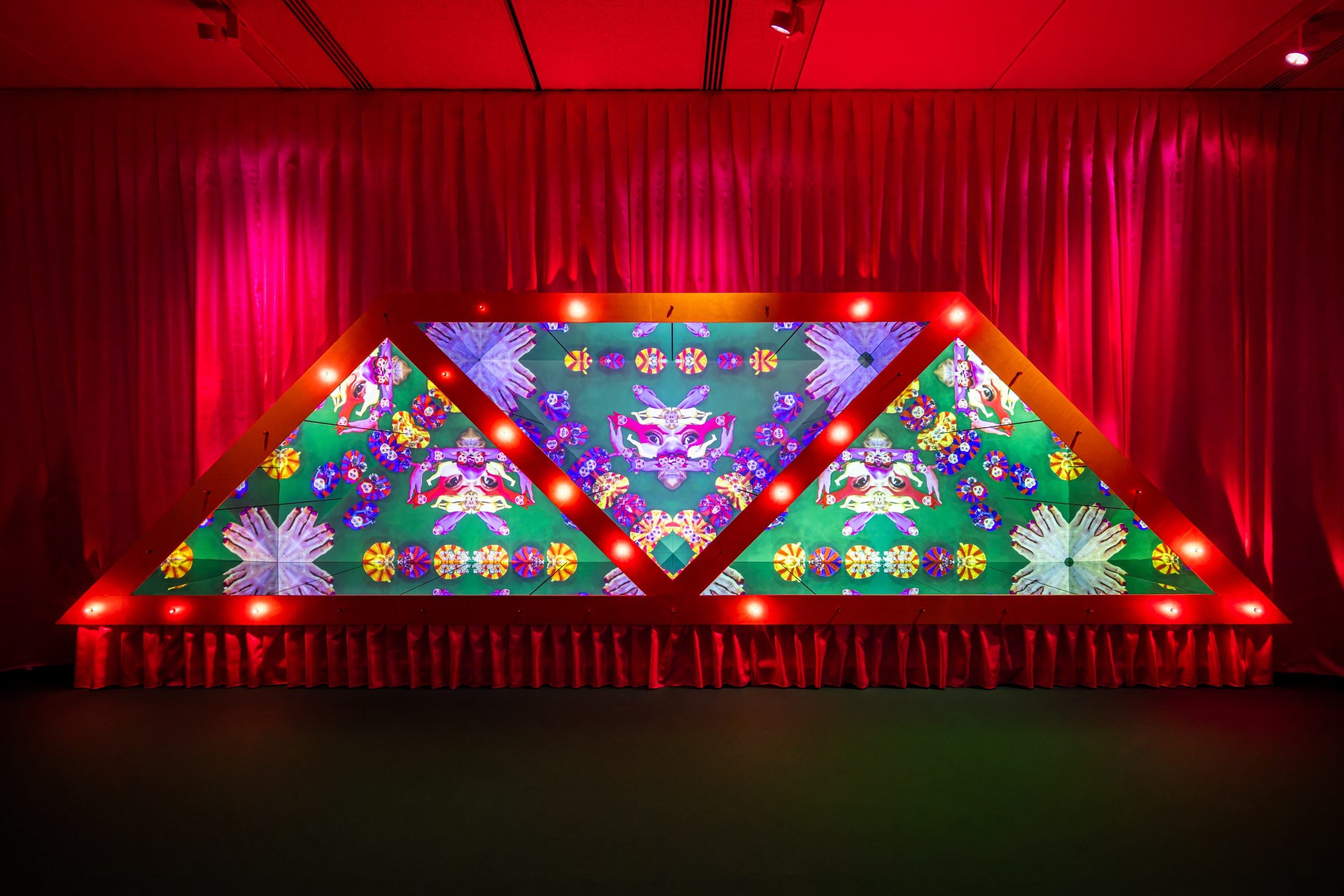
Sasaoka Yuriko’s solo show at the Shiga Museum of Art has officially opened; it runs through March 22, 2026. An interview with the artist was recently published in Ocula, focusing on her process in creating the exhibition and her latest work, Torch (2026), of which she says: “I chose this kaleidoscope structure because I was tired of being bound by the 16:9 frame. I wanted to liberate myself and the viewer, creating a world that feels like it’s expanding infinitely outward, eventually overrunning the entire room.” You can also read a review of this exhibition in Frieze.
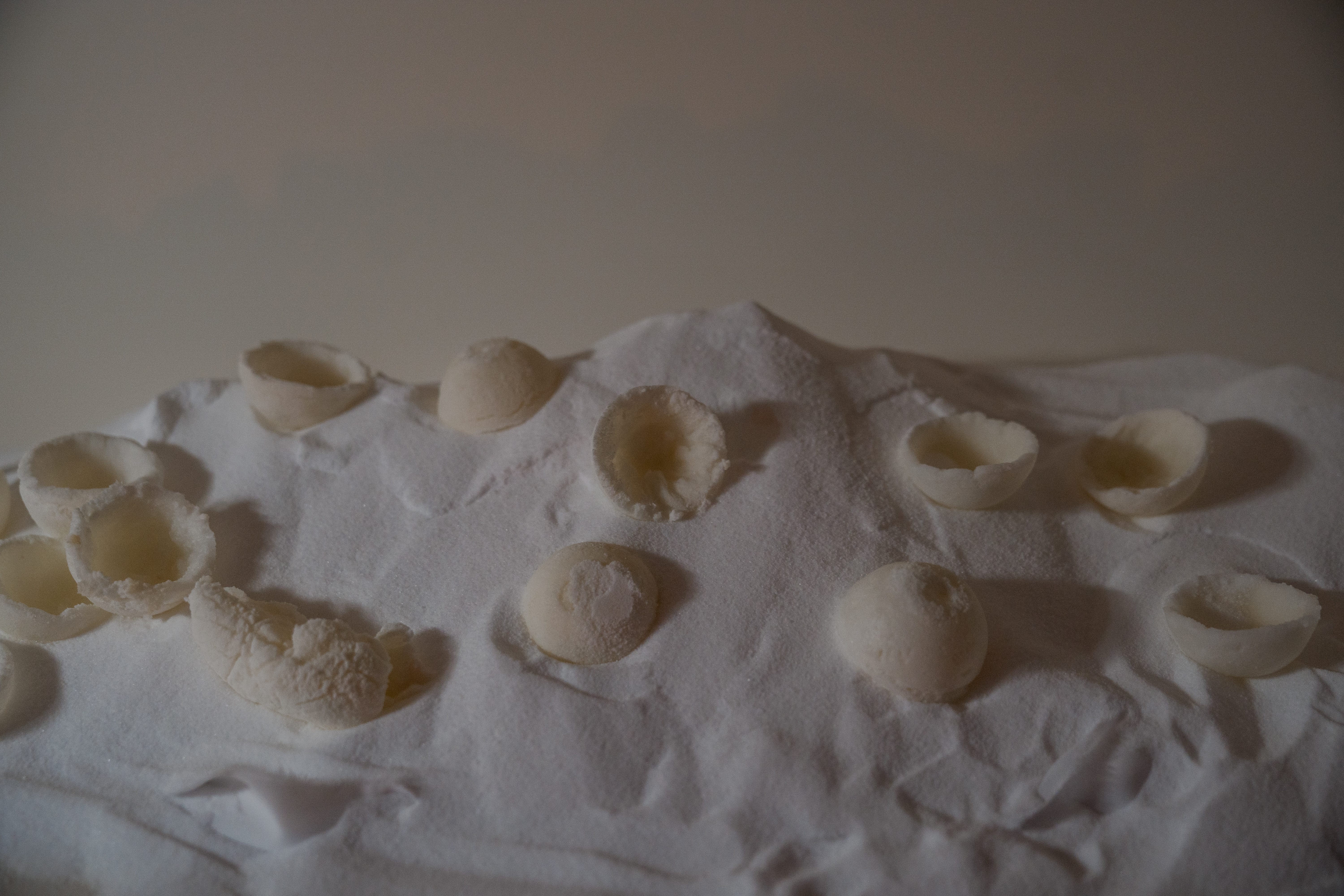
Michele Chu will open a solo show at MACA Art Center in Beijing, opening May 16. Using salt as both instrument and sonic architecture, Chu will create site-specific installations on the sound of grief. These intimate, immersive environments will invite audiences to journey through personal and collective loss.
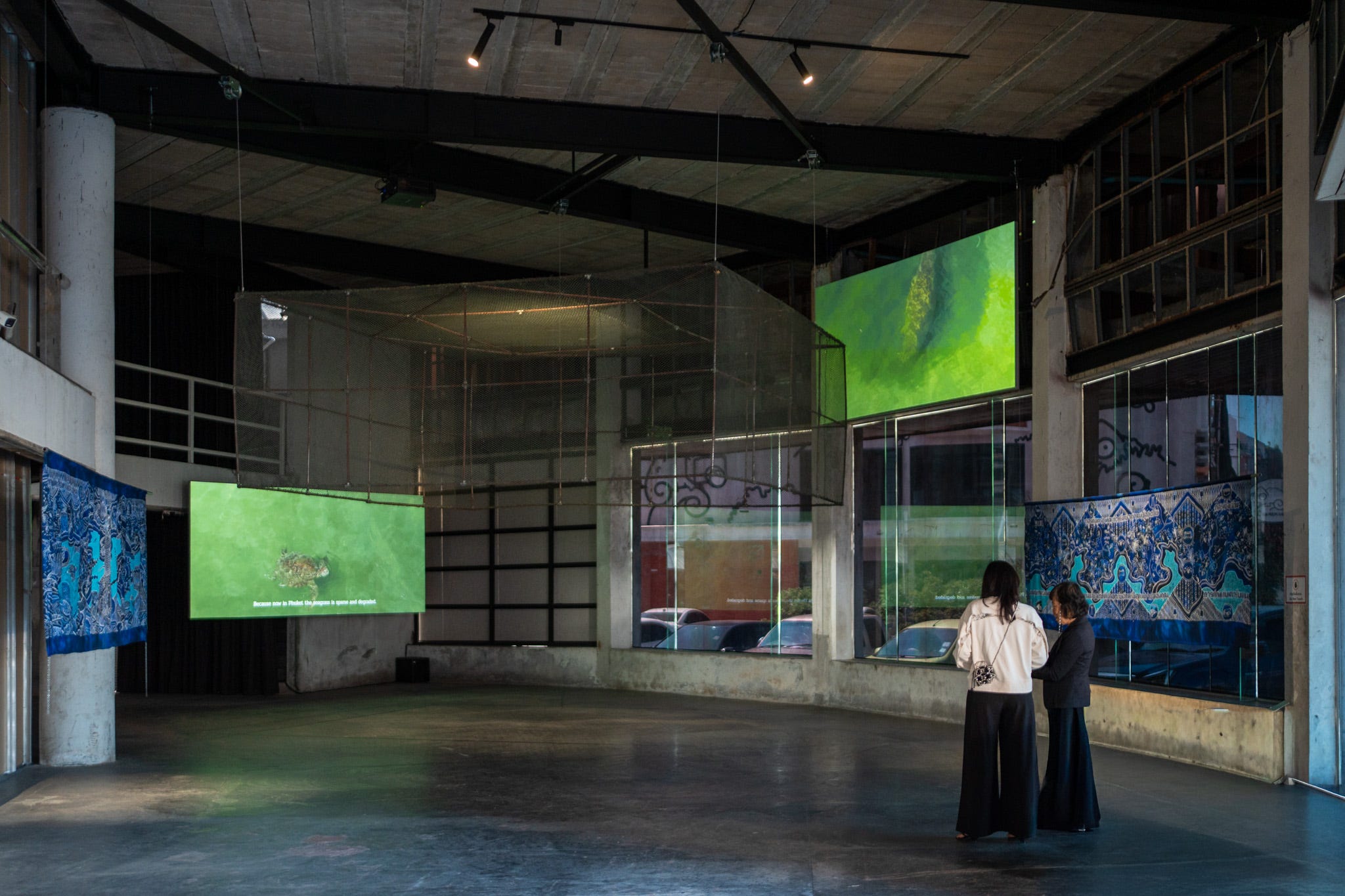
Zheng Mahler’s new commission for the Thailand Biennale, “Seagrass Kra Chang,” is now on view at Poon Phol Night Plaza. For this work, seagrass beds in Phuket become both subject and metaphor for redefining “resource.” Through installation, video, and sound—featuring dugongs, conservation efforts, and kra chang imagery—the work shifts focus from extraction and global trade toward cultivation, care, and the environmental costs of biennale exposition.
The duo will take part in the Klima Biennale Wien in Vienna, opening April 9, 2026. For this project, they will create a newly commissioned work at Karlskirche, a Baroque church in the Karlsplatz, as part of the sub-exhibition, “(No) Funny Games or how we learned to start caring and love the dystopia.” The biennial runs through May 10, 2026.
Chan Ting has been selected as one of the artists that featured in a new curatorial project, “Bloody Worm: Nomadic Bodies, Conscious Experience, and Embodiment Practice,” supported by Octone Foundation in Hong Kong. “Bloody Worm” was initiated by independent curator Yifei Tang; the yearlong project includes close observation, collaborative research, diverse events and organic funding mechanisms.
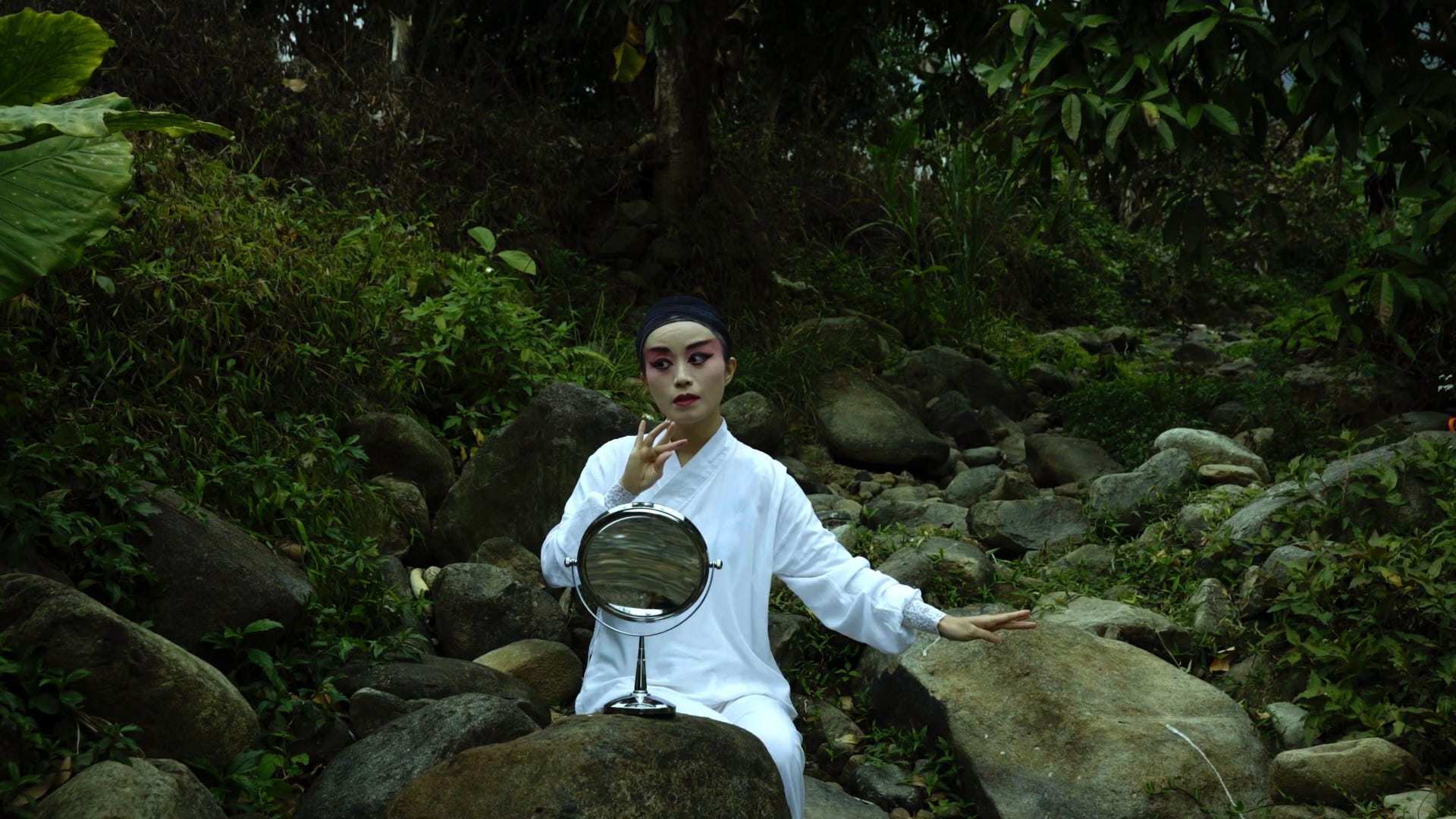
Chan Ting will also show work at the seventh edition of Queer East in London, a cross-disciplinary festival that showcases boundary-pushing LGBTQ+ cinema, live arts, and moving image. The festival opens in London in April.
RECOMMENDATIONS
In their months-long research into mushrooms and AI, Zheng Mahler have encountered a variety of reference books, a small selection of which they recommend below. These books will also be available to browse in person at the gallery’s Study during the exhibition run.
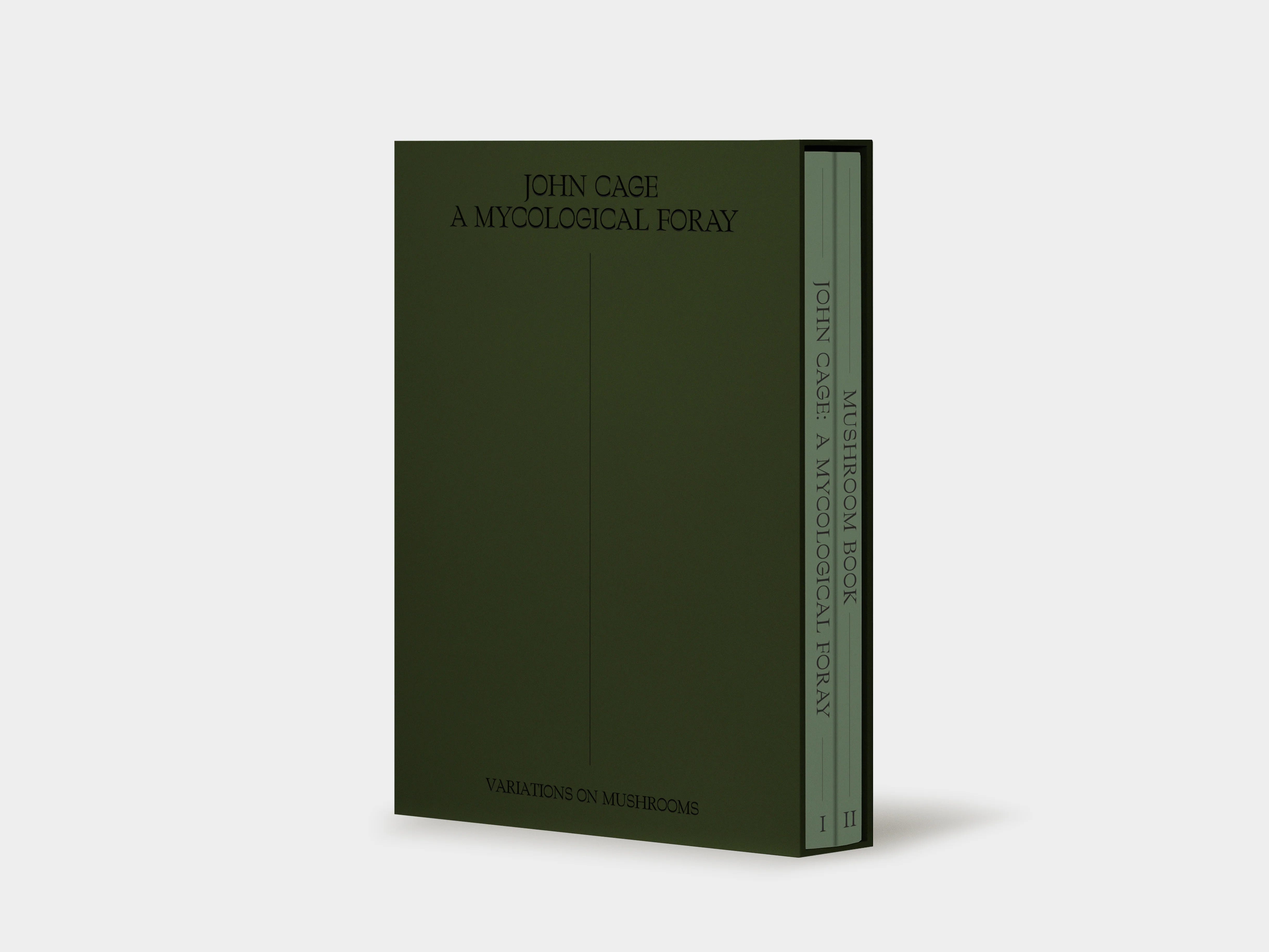
A Mycological Foray by John Cage
開拓人類與真菌的共同未來 (Exploring the Common Future of Mankind and Fungi) by Alvin Tang
Let’s Become Fungal! Mycelial Teachings and the Arts by Yasmine Ostendorf-Rodriguez
Fruiting Bodies by Ying Ang
Mycelium Running: How Mushrooms Can Save the World by Paul Stamets

Raising AI: An Essential Guide to Parenting Our Future by De Kai
If Anyone Builds It, Everyone Dies by Eliezer Yudkowsky & Nate Soares
The Master Algorithm by Pedro Domingo
Dark Forest Theory of the Internet by Bogna Konior
And we recommend the television series PLURIBUS, in which a jaded romantasy writer grapples with a new social order when almost the entire world population is turned into a single hive mind. This nameless hive mind, which inhabits the bodies of formerly independent people, is seemingly benevolent, helpful, and maintain a moral superiority to the point of absurdity: they are essentially starving because they cannot allow themselves to pick apples off trees, or cut down vegetables.
Undeniable is the striking resemblance to a sentient artificial intelligence system — the story oscillates between the protagonist’s fear, acceptance, and even love of this hive mind, mirroring our complex relationship to AI and its social constructs. The first season is now available to watch on Apple TV.
Take care,
Willem and Ysabelle